
Nesting Material
You can help your birds build nests by keeping natural materials in your yard or by offering them suitable provided items.
Natural
- Structural materials (outer nest layer). These items give the nest strength and shape.
- Small twigs and sticks.
- Dead leaves, dry grass or straw (must be untreated—no pesticides or fertilizers).
- Pine needles, bark strips.
Soft lining materials (inner nest layer). These provide warmth and insulation for eggs and nestlings.
- Feathers.
- Plant fluff or down (e.g., cattail fluff, cottonwood down).
- Moss, lichen, rootlets or fine plant fibers.
To offer nesting material safely place materials loosely (never tied or bundled).
- Use: open trays, clean suet cages.
- Place small piles in shrubs or under trees.
- Keep materials dry and mold‑free. Refresh after rain if needed.
Materials you should never provide. These items are repeatedly linked to injuries, nest failure, and chick deaths.
- Dryer lint - Contains chemical residues, falls apart when wet, can suffocate or chill nestlings.
- Yarn, string, twine, thread.
- Human hair, plastic strips, tinsel, cellophane long pet fur, any pet fur treated with flea medication.
- Fabric scraps or synthetic fibers.
Provided Offerings
- Nest Building Ball
- 100% cotton, undyed & unbleached.
- Birds can pull into loose, fluffy tufts.
- Short fibres.
- Alpaca Fur - best “fur” option:
- No lanolin reduces the risk of eye irritation and mite attraction (a known issue with some sheep wool).
- Hollow fiber structure allows excellent insulation without trapping excessive moisture.
- Doesn’t mat easily when damp, maintains the airflow inside the nest.
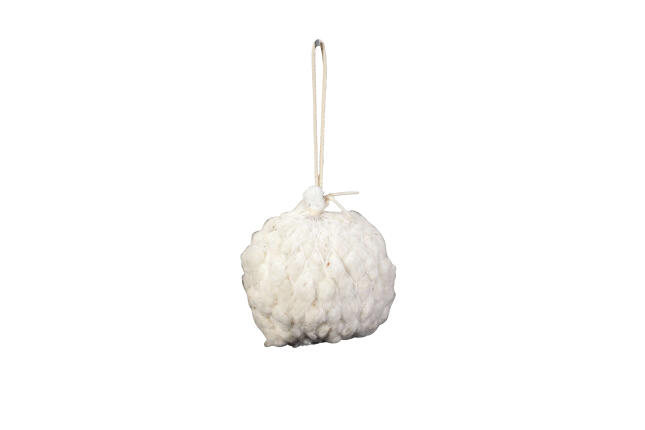
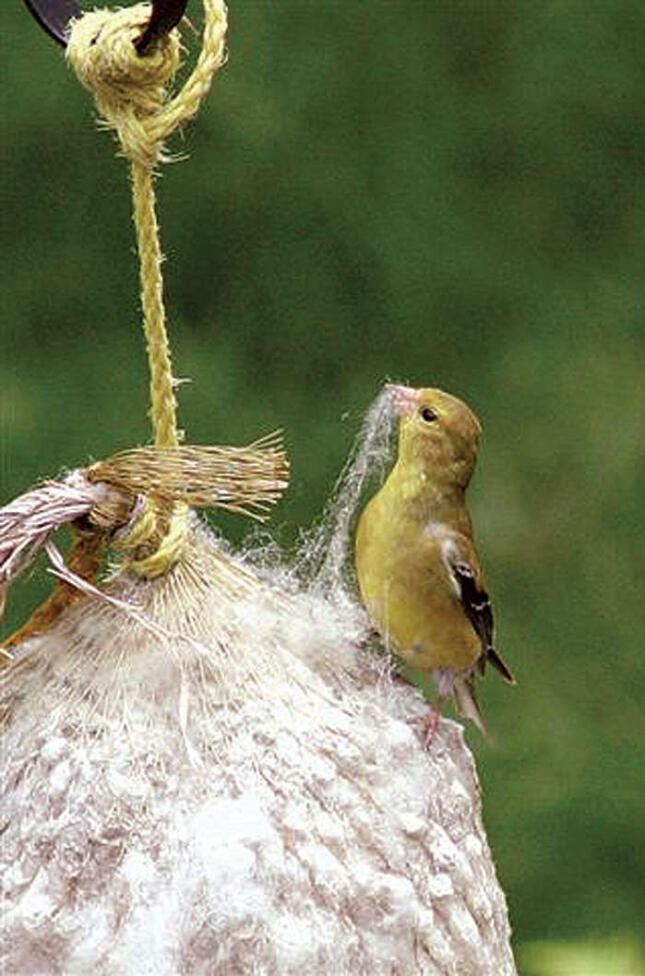
Nest Building Ball made with 100% cotton, undyed, unbleached and short fibre.