Birds Make Our Neighbourhoods Better
Research across psychology, ecology, and public health shows that birds are powerful contributors to human health. Time in nature reduces stress and improves physical recovery, and studies highlight that birdsong specifically boosts mood, attention, and cognitive restoration. A 2022 Scientific Reports study found that encounters with birdlife improve mental wellbeing even for people living with depression. Urban research echoes this: a 2017 BioScience study linked higher bird abundance to lower stress and anxiety, while a 2013 study in the Journal of Environmental Psychology identified birdsong as the natural sound most associated with stress recovery. Birds also benefit communities economically - green spaces rich in birdlife can raise nearby property values by as much as $45,000. Together, these findings show that birds aren’t just part of the landscape; they’re essential to healthier, happier communities. Now is the time to encourage these great neighbours to nest in your area.
Nesting Season in Ontario
Nesting season timing depends on:
- Seasonal changes – i.e. – winter to spring
- Photoperiod - daylight hours lengthen in spring, the increasing photoperiod triggers hormonal and physiological changes in passerines that prepare them for breeding.
- Food availability – used to fine tune actual nesting cycle.
- Primary nesting season: April-August
- Peak activity: May-June
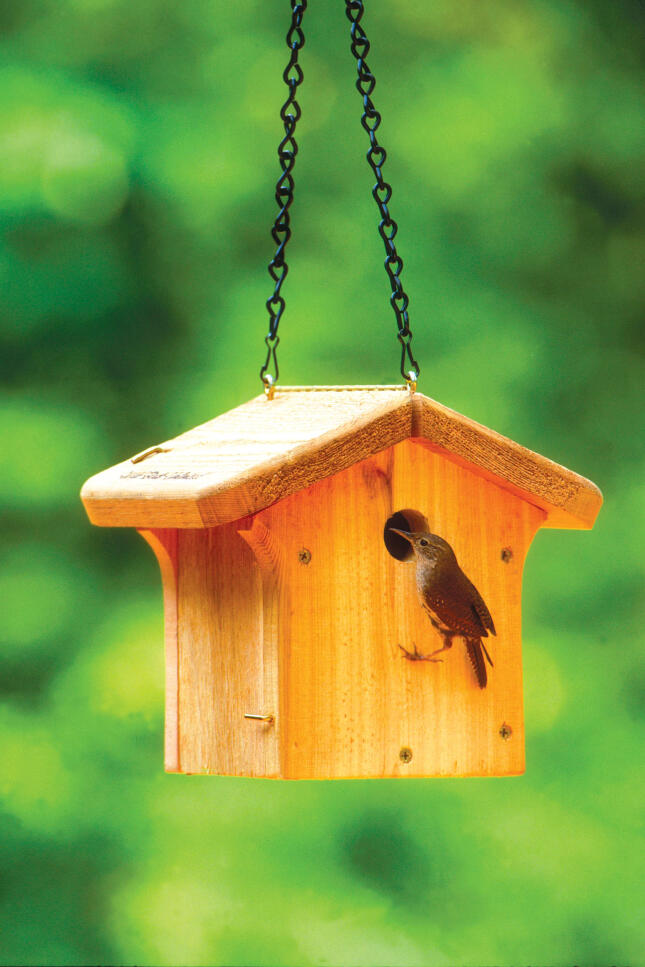
Northern House Wren - they are the only backyard neighbour that will use a nest box with motion.