This is What Makes a Good Traditional Bird House
Well Constructed
- Untreated wood, unpainted
- Cedar or pine
- Larger houses (owls) exterior grade plywood
- Held together with galvanized screws which provides the best seal, easy to remove and replace
- Nails can loosen over time and allow excess rain in the nest box.
- Do not use staples
Keep Birds Dry
- Sloped Roof
- Overhangs front by 5-10 cm (2-4”); Sides 5 cm (2”).
- Recessed Floor
- Recess the floor at least 6.35 mm (¼”).
- Keeps the nest from getting wet
- Drainage Holes
- Cut away the corners of the floor
Regulate Temperature
- Thick Walls
- Walls should be at least 19 mm (¾”) thick.
- Ventilation Holes
- Adequate ventilation requires two 16 mm (5/8”) diameter located on the side walls near the top.
Correct sized entrance hole
- Entrance hole is correct size for the species - example - Black-capped Chickadee entrance hole size is 1 1/8” (28mm).
Helps Fledglings Leave The Nest More Easily
- Interior wall below the entrance hole should help nestlings climb out of the box:
- Roughed up with coarse sandpaper.
- A series of shallow horizontal cuts, like a small ladder.
It Makes Maintenance Easy
- Hinged Side and/or Roof and Sturdy Latch
- A hinged side gives you access for cleaning and monitoring your nest box.
- A latch or nail keeps the box securely closed until you are ready to open it.
Very important - No Perch - Helps Keeps Predators Out
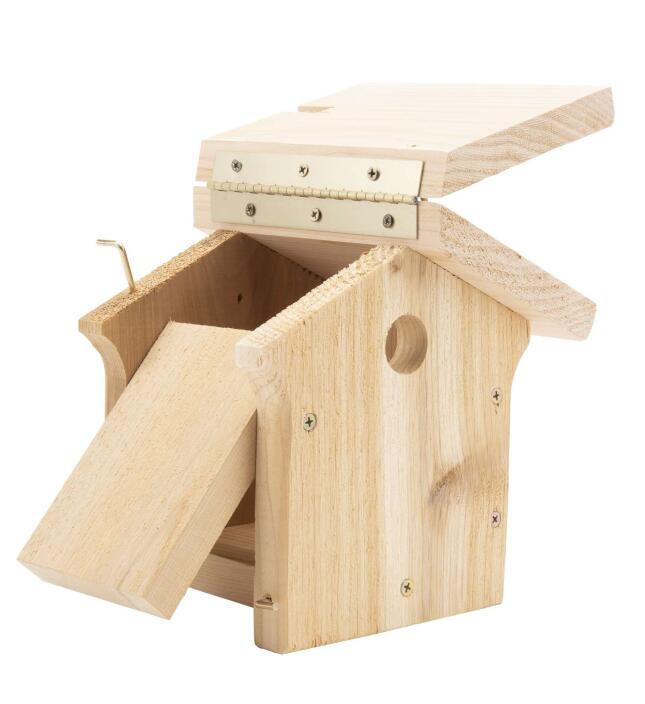
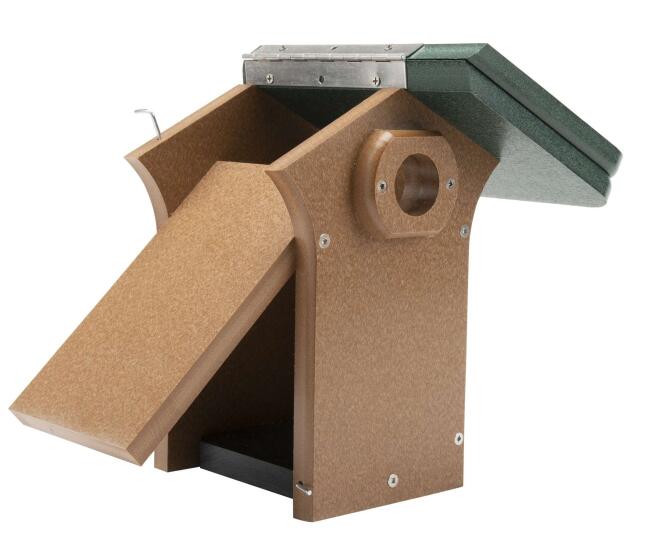 Black-capped Chickadee Nest Box Eastern Bluebird Nest Box